


2026-10-31T10:06:31
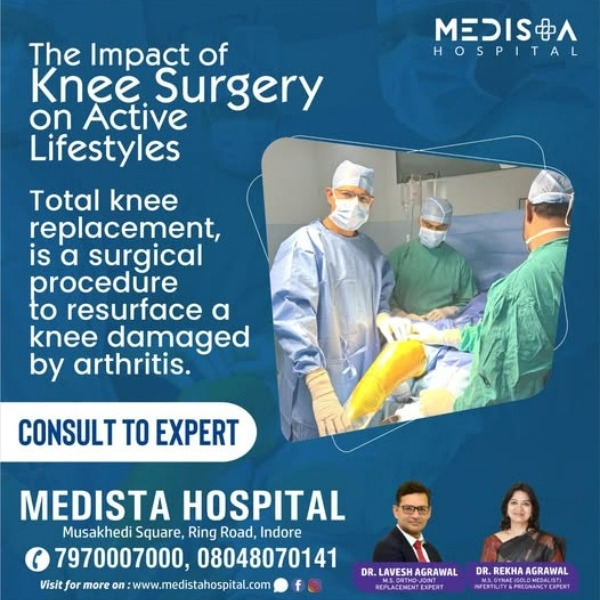
Doctor for Knee Surgery in Betma – Dr. Lavesh Agarwal at Medista Hospital Knee pain can significantly impact your daily activities, making it difficult to walk, climb stairs, sit comfortably, or engage in any physical activity. Whether you experience persistent knee pain, stiffness, swelling, difficulty walking, or have knee joint problems due to arthritis or an injury, it's crucial to seek appropriate medical advice. If you're looking for an experienced doctor for knee surgery in Betma, Dr. Lavesh Agarwal at Medista Hospital provides orthopedic advice and guidance for a variety of knee-related problems. Dr. Lavesh Agarwal is an orthopedic specialist who focuses on the diagnosis and management of bone, joint, and musculoskeletal problems. His practice involves assessing a patient's symptoms, assessing the health of the knee joints, and recommending appropriate treatment options based on each patient's medical needs. At Medista Hospital, patients can seek advice for knee pain, osteoarthritis, knee joint degeneration, ligament injuries, and other orthopedic problems. Treatment options may include medication, physiotherapy, lifestyle changes, or surgery, depending on the severity of the condition. Common Knee Problems That May Require Orthopedic Treatment The knee is one of the most important weight-bearing joints in the human body. It supports the body's weight and helps with daily activities like walking, running, bending, and standing. Various medical conditions and injuries can affect knee function. 1. Knee Osteoarthritis Knee osteoarthritis is a joint disease that causes the protective cartilage to gradually deteriorate. This can cause pain, swelling, stiffness, and limited joint movement. Common symptoms include: * Pain when walking or standing. * Difficulty climbing or descending stairs. * Stiffness in the knee in the morning. * Swelling around the knee joint. * Difficulty sitting cross-legged. An orthopedic consultation can help determine the severity of osteoarthritis and identify the appropriate treatment. 2. Severe Knee Pain Persistent knee pain can be caused by arthritis, previous injuries, cartilage damage, or other joint conditions. When pain persists despite conservative treatment, an orthopedic evaluation is necessary. Dr. Lavesh Agarwal can determine the underlying cause and guide patients on the appropriate treatment options. 3. Walking Problems Due to Knee Problems When the knee joint is severely damaged, patients may have difficulty walking even short distances. Some may even need support to stand or walk. Early diagnosis and proper treatment planning can help prevent further functional problems. 4. Stiffness and Swelling in the Knee Joint Stiffness and swelling in the knee can be caused by inflammation, arthritis, injuries, or joint deterioration. Persistent symptoms should not be ignored, especially if they affect daily activities. An orthopedic specialist can examine the joint and recommend further testing or treatment. 5. Ligament and Sports Injuries Sports activities, accidents, and sudden twisting movements can damage knee ligaments. Injuries to the ACL, PCL, MCL, or other supporting structures can cause pain, instability, and difficulty bearing weight. A correct diagnosis is essential to determine whether rehabilitation or surgical treatment is needed. What is Knee Replacement Surgery? Knee replacement surgery, also known as knee arthroplasty, is an orthopedic procedure performed to replace damaged parts of the knee joint with artificial parts. It is typically performed on patients with severe damage to the knee joint, especially due to advanced osteoarthritis, when non-surgical treatments do not provide sufficient relief. During the procedure, damaged joint surfaces are removed and replaced with specially designed artificial parts. The goal is to reduce pain, improve joint function, and improve patient mobility. When is knee replacement surgery recommended? An orthopedic doctor may consider knee replacement surgery if a patient experiences: * Severe and persistent knee pain. * Advanced osteoarthritis. * Significant cartilage damage. * Difficulty walking or standing. * Severe stiffness in the knee. * Limited mobility, affecting daily activities. * No significant improvement with medication and physiotherapy. Not every patient with knee pain requires surgery. This decision depends on the clinical examination, imaging results, symptoms, overall health, and treatment goals of the individual patient. Types of Knee Replacement Surgery Depending on the patient's joint condition and medical needs, different knee replacement methods may be considered. 1. Total Knee Replacement Surgery Total knee replacement involves replacing the damaged surfaces of the entire knee joint with an artificial implant. This is typically performed on patients with advanced arthritis affecting multiple parts of the knee. 2. Partial Knee Replacement Surgery Partial knee replacement may be appropriate for select patients whose joint damage is limited to one part of the knee. Only the affected part is replaced while the joint structure remains healthy. 3. Robotic-Assisted Knee Replacement Surgery Robotic-assisted knee replacement uses advanced technology to assist surgeons with preoperative planning and surgical precision. This can help position and align the implant to suit the patient's individual anatomy. The effectiveness of robotic-assisted surgery depends on the patient's condition, clinical needs, and available technology. Benefits of Proper Knee Surgery and Treatment For patients with significant knee joint damage, knee replacement surgery can offer numerous benefits if performed as directed by a doctor. Some potential benefits include: * Reduction in chronic knee pain. * Improved walking ability. * Improved knee joint movement. * Improved ability to perform daily activities. * Reduction in complications caused by severe arthritis. * Improved overall mobility and independence. Recovery outcomes vary from patient to patient. Physiotherapy, rehabilitation, regular follow-up, and adherence to medical advice play a key role in recovery. What to expect during a knee surgery consultation? If you're looking for a knee surgery doctor near Betma, understanding the consultation process can help you prepare for your appointment. A typical orthopedic examination may include: 1. Understanding your symptoms: The doctor discusses your knee pain, its duration, severity, previous injuries, and its impact on daily activities. 2. Physical examination: The knee joint may be checked for swelling, tenderness, stability, flexibility, and range of motion. 3. Diagnostic testing: Depending on the symptoms, an X-ray, MRI scan, or other tests may be recommended. 4. Treatment planning: Based on the results, the doctor discusses the appropriate treatment options, which may include non-surgical management or surgery. 5. Recovery guidance: Patients considering surgery are provided with information about rehabilitation, physiotherapy, precautions, and follow-up care. The Importance of Physiotherapy After Knee Replacement Surgery Physiotherapy is an essential part of the recovery process after knee replacement surgery. It helps patients gradually regain strength, flexibility, balance, and confidence in movement. A rehabilitation program may include: * Gentle knee range-of-motion exercises. * Quadriceps strengthening exercises. * Walking practice with proper support. * Range-of-motion exercises. * Balance and stability training. * Gradual improvement in daily activities. Patients should follow a personalized rehabilitation plan developed by their orthopedic surgeon and physiotherapist. Why Choose Medista Hospital for an Orthopedic Consultation? Medista Hospital is a multispecialty healthcare facility where patients can seek medical consultation and treatment guidance for a variety of health conditions. Patients looking for an orthopedic doctor near Betma can consult Dr. Lavesh Agarwal at Medista Hospital for knee-related problems and surgical evaluation. Essential aspects of orthopedic care include: * Consultation with an orthopedic specialist. * Evaluation of knee pain and joint conditions. * Guidance regarding knee replacement procedures. * Assessment of surgical needs. * Clinically indicated diagnostic evaluation. * Postoperative care and rehabilitation guidance. The right treatment approach begins with an accurate diagnosis and understanding the patient's individual medical needs. When should you see a knee surgery doctor? Ignoring persistent knee pain can affect your mobility and daily activities. You should consult an orthopedic specialist if you experience: * Knee pain that lasts for several weeks. * Difficulty walking or climbing stairs. * Frequent swelling in the knee. * Severe stiffness upon waking. * Knee pain that disrupts your sleep. * Difficulty standing for long periods of time. * Knee instability or frequent knee laxity. * Pain that does not respond to initial treatment. Sudden onset of severe pain, inability to bear weight, or warmth, redness, and swelling in the knee, especially accompanied by fever, requires immediate medical attention. Consult Dr. Lavesh Agarwal for Knee Surgery in Betma Living with persistent knee pain can make even simple tasks difficult. Timely orthopedic consultation can help diagnose the underlying problem and determine the most appropriate treatment. If you or a family member is experiencing chronic knee pain, osteoarthritis, knee stiffness, or difficulty walking, consult Dr. Lavesh Agarwal at Medista Hospital for an orthopedic examination and guidance regarding knee surgery. Patients in Betma and surrounding areas can schedule a consultation to understand available treatment options, including knee replacement surgery, based on their medical conditions. Book an orthopedic consultation today and take the first step towards better knee health and improved mobility. Frequently Asked Questions (FAQs) 1. Who is the best doctor for knee surgery in Betma? Patients looking for a knee surgery doctor in Betma can consult Dr. Lavesh Agarwal at Medista Hospital. He provides orthopedic advice and guidance for knee pain, osteoarthritis, knee joint problems, and knee replacement surgery. 2. When should I consult a knee replacement surgeon? If you have persistent knee pain, advanced arthritis, difficulty walking, joint stiffness, or pain that doesn't respond to medication and physiotherapy, you should consult an orthopedic surgeon. 3. Is knee replacement surgery necessary for every patient with knee pain? No. Knee replacement is generally considered for patients with severe joint damage. Many knee conditions can be managed with medication, physiotherapy, lifestyle changes, and other non-surgical treatments. 4. What is the difference between a total and partial knee replacement? A total knee replacement involves replacing the entire damaged surface of the knee joint, while a partial knee replacement involves replacing only the affected part. The correct approach depends on the extent of joint damage. 5. Is robotic knee replacement surgery better than traditional surgery? Robotic-assisted knee replacement offers technology-assisted surgical planning and precision. However, this depends on the patient's condition, and the best surgical approach should be determined by the orthopedic surgeon. 6. How long does recovery take after knee replacement surgery? Recovery depends on age, overall health, the surgical procedure, and rehabilitation. Many patients begin walking with assistance immediately after surgery, while further recovery and strengthening continue for several weeks and months. 7. Can elderly patients undergo knee replacement surgery? Age alone does not determine eligibility. Overall health, bone condition, medical history, and fitness for surgery are important factors considered during evaluation. 8. Is physiotherapy necessary after knee replacement surgery? Yes. Physiotherapy is an important part of rehabilitation. It helps improve knee movement, muscle strength, balance, and walking ability. 9. Can both knees be replaced at the same time? Bilateral knee replacement may be an option for some patients with severe arthritis in both knees. This decision depends on medical fitness, surgical risks, and the surgeon's assessment. 10. Where can I consult Dr. Lavesh Agarwal for knee surgery near Betma? Patients in Betma and surrounding areas can seek orthopedic consultation from Dr. Lavesh Agarwal at Medista Hospital for evaluation of knee pain and guidance on appropriate surgical and non-surgical treatment. Doctor for Knee Surgery in Betma Best Knee Surgery Doctor in Betma Knee Replacement Surgeon in Betma Orthopedic Doctor in Betma Knee Specialist in Betma Knee Pain Treatment in Betma Knee Replacement Doctor Near Betma Best Orthopedic Surgeon Near Betma Total Knee Replacement Surgery Partial Knee Replacement Surgery Robotic Knee Replacement Surgery