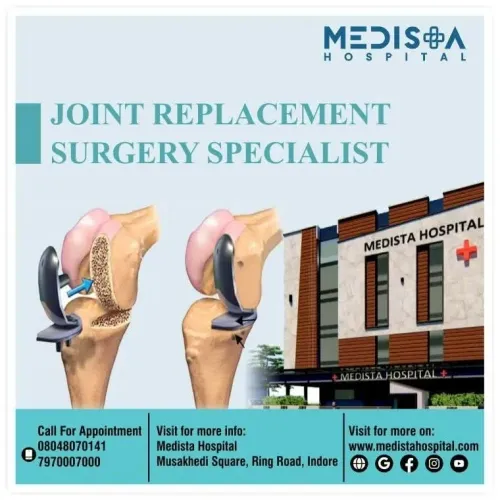

Joint Replacement Surgery in Sendhwa – Dr. Lavesh Agarwal at Medista Hospital
Joint pain, stiffness, swelling, and mobility issues can impact your independence and quality of life. If knee or hip pain makes daily activities like climbing stairs, sitting, standing, or walking difficult, it's time to consult an orthopedic specialist. For patients seeking joint replacement surgery in Sendhwa, Dr. Lavesh Agarwal at Medista Hospital provides orthopedic advice and guidance for patients with chronic joint problems.
Joint replacement surgery may be recommended when a joint is severely damaged due to osteoarthritis, rheumatoid arthritis, previous injuries, or other degenerative diseases, and non-surgical treatment no longer provides adequate relief. The decision to undergo surgery depends on the severity of symptoms, medical history, test results, imaging reports, and the patient's overall health.
At Medista Hospital, patients can seek professional guidance to understand their joint condition, learn about appropriate treatment options, and learn about recovery after joint replacement. The goal is to help patients make informed decisions about their orthopedic care and work toward improving mobility and daily function.
If you live in Sendhwa or the surrounding areas and are experiencing persistent knee or hip pain, an orthopedic examination can help determine the right next step.
What is joint replacement surgery?
Joint replacement surgery is an orthopedic procedure that replaces damaged joint parts with artificial parts called implants or prostheses. These parts are designed to restore joint function and reduce pain caused by severe joint damage.
This procedure is typically performed on the knee and hip, although other joints may also be considered depending on the patient's condition.
The main goals of joint replacement surgery may include:
* Reducing pain caused by extensive joint damage.
* Improving mobility and daily activities.
* Repairing some joint defects.
* Improving joint stability and function.
* Helping patients return to normal daily activities after rehabilitation. Joint replacement is not necessary for everyone with joint pain. Many patients respond to medication, physiotherapy, activity modifications, weight management, or other conservative treatments. Surgery is usually considered when symptoms persist despite appropriate non-surgical care.
Types of Joint Replacement Surgery
Understanding common orthopedic procedures can help patients prepare for their consultation.
1. Total Knee Replacement Surgery
Total knee replacement may be considered for patients with advanced knee arthritis, severe cartilage damage, persistent knee pain, or significant mobility impairment. During the procedure, damaged joint surfaces are replaced with artificial components that improve knee movement and function.
2. Total Hip Replacement Surgery
Hip replacement may be recommended for severe hip arthritis, osteonecrosis, certain fractures, or other conditions that damage the hip joint. This procedure replaces damaged joint surfaces with artificial components to reduce pain and improve mobility.
3. Partial Knee Replacement
For some patients whose joint damage is limited to one part of the knee, partial knee replacement may be an option. Efficacy depends on the location and extent of joint damage, the condition of the ligaments, and overall knee stability.
4. Revision Joint Replacement
Revision surgery may be considered when problems with the existing artificial joint develop, such as loosening, infection, wear, or instability. The need for revision depends on a detailed orthopedic assessment.
The appropriate approach is determined based on symptoms, physical examination results, imaging, medical history, and individual treatment goals.
When should you consult a joint replacement specialist?
When joint pain begins to interfere with daily life, it shouldn't be ignored. Those experiencing persistent symptoms may benefit from an orthopedic consultation to determine the underlying cause and discuss treatment options.
Consider consulting an orthopedic specialist if you experience:
* Persistent knee or hip pain when walking or standing.
* Stiffness in the joint, especially after resting.
* Difficulty climbing stairs or getting up from a chair.
* Swelling or decreased mobility.
* Bending of the joint or other obvious changes in joint alignment.
* Pain that affects sleep or daily activities.
* Difficulty walking even after trying recommended conservative treatments.
These symptoms do not necessarily mean surgery is necessary. Early diagnosis helps determine whether medication, physiotherapy, lifestyle changes, other treatments, or joint replacement should be considered.
Causes of Joint Damage and Pain
Many diseases can damage joints and affect mobility. Osteoarthritis: In this condition, joint cartilage gradually deteriorates, often leading to pain, stiffness, and reduced movement.
Rheumatoid Arthritis: This inflammatory disease can damage joint tissue and cause swelling, pain, and stiffness.
Previous Injuries: Fractures, ligament injuries, and other forms of joint trauma can cause long-term joint problems.
Osteonecrosis: Reduced blood supply to the bone can damage bone tissue and affect joints, especially the hip.
Age-Related Changes: Joint problems become more common with age, although joint damage can also occur in younger people.
Identifying the cause of joint pain is important, as not every condition requires surgery.
Joint Replacement Treatment at Medista Hospital
Patients seeking joint replacement surgery in Sendhwa can consult Dr. Lavesh Agarwal at Medista Hospital for an orthopedic evaluation and treatment guidance.
The treatment process typically involves assessing symptoms, understanding the patient's medical history, reviewing necessary tests, and discussing appropriate treatment options. When considering surgery, patients should receive information about the procedure, potential benefits, risks, rehabilitation needs, and expected recovery.
Important aspects of treatment planning include:
* Clinical evaluation: Understanding the nature, duration, and severity of joint pain.
* Diagnostic assessment: Reviewing X-rays and other tests when clinically indicated.
* Individual treatment planning: Taking into account the patient's joint condition, age, activity level, and general health.
* Surgical counseling: Explaining the procedure and available options.
* Recovery guidance: Discussing rehabilitation, mobility support, wound care, and follow-up.
The goal is to help patients understand their condition and make informed decisions about their care.
Benefits of Joint Replacement Surgery
When properly advised, joint replacement surgery can provide many benefits for people with significant joint damage.
* Relief from pain caused by severe joint disease.
* Improved ability to walk and perform daily activities.
* Improved joint movement and function. • Dependence on some mobility aids decreases over time.
* Improved participation in daily activities and recreational activities.
* When recovery goes well, quality of life improves.
Outcomes vary from person to person. Surgery cannot guarantee complete pain relief or a return to pre-joint damage levels. Expected benefits should be discussed with the treating surgeon.
Recovery after joint replacement surgery
Recovery is an important part of joint replacement treatment. The timeline depends on the type of surgery, general health, muscle strength, and individual recovery.
Early recovery
After surgery, the healthcare team monitors the patient's condition and provides instructions on pain management, wound care, and safe movement. Assisted walking can be resumed when medically appropriate.
Physiotherapy and Exercise
A physiotherapist may recommend gentle movement and strengthening exercises to improve circulation, flexibility, muscle strength, and mobility. Exercises should be performed as directed by the treatment team. Walking and Daily Activities
Patients may initially require a walker, crutches, or other prescribed assistance. As recovery progresses, walking distance and activity levels are gradually increased.
Follow-up Appointments
Follow-up visits help the surgeon assess healing, joint function, and rehabilitation progress. Patients should attend scheduled appointments even if symptoms are improving.
Seek immediate medical attention if you experience any concerns about the wound, including fever, increasing redness or discharge, sudden severe joint pain, or new swelling in the calf. Chest pain or sudden shortness of breath after surgery also requires immediate medical attention.
Why Choose Dr. Lavesh Agarwal at Medista Hospital?
For those seeking a joint replacement consultation near Sendhwa, choosing an orthopedic specialist involves understanding the doctor's qualifications, relevant surgical experience, available hospital facilities, and post-operative care.
When consulting with Dr. Lavesh Agarwal at Medista Hospital, patients can discuss:
* The cause and severity of their joint problem.
* Whether non-surgical treatment is appropriate.
* Whether knee or hip replacement may be necessary.
* The potential benefits, risks, and limitations of surgery.
* Rehabilitation needs and estimated recovery milestones.
* Follow-up care and precautions after the procedure.
Patients should inquire directly with the hospital about the doctor's current qualifications, experience, and treatment plans before making any decisions.
Joint Replacement Surgery in Sendhwa – Frequently Asked Questions
1. Who is a suitable candidate for joint replacement surgery? Patients with severe joint damage, persistent pain, and mobility limitations, who have not fully responded to appropriate non-surgical treatments, may be candidates. This decision depends on the individual's examination results and overall health.
2. Where can I consult for joint replacement surgery if I live in Sendhwa?
Sendhwa patients can contact Medista Hospital to inquire about orthopedic consultation with Dr. Lavesh Agarwal and to confirm appointment availability and transportation arrangements.
3. Is joint replacement surgery always necessary for knee pain?
No. Many cases of knee pain can be managed with medication, physiotherapy, activity modifications, or other treatments. Joint replacement is considered when damage has progressed and symptoms persist despite appropriate treatment.
4. What is the difference between knee replacement and hip replacement?
Knee replacement repairs damaged surfaces of the knee joint, while hip replacement repairs damaged surfaces of the hip joint. The choice depends on which joint is affected and the underlying condition.
5. How long does it take to recover after joint replacement surgery?
The recovery process varies by patient and procedure. Many people make significant progress within the first few weeks, while regaining strength, endurance, and full recovery may take several months or longer.
6. What exercises are recommended after joint replacement?
Exercises may include ankle pumps, muscle contractions, light range-of-motion exercises, and supervised walking. The exact routine depends on the operation and the surgeon's rehabilitation protocol.
7. Can joint replacement surgery improve walking?
When severe joint damage is the primary cause of mobility problems, joint replacement can reduce pain and improve walking ability. Results depend on overall health, muscle strength, rehabilitation, and other medical conditions.
8. Is joint replacement surgery safe?
Joint replacement is a well-known orthopedic procedure, but it carries risks such as infection, blood clots, bleeding, stiffness, dislocation of hip replacement, and implant-related problems. The surgeon should explain the risks and precautions to each individual.
9. What should I bring to my orthopedic consultation?
Bring previous X-rays or scan reports, medical records, a list of current medications, information about existing health conditions, and details of previous treatments.
10. How do I book an appointment with Dr. Lavesh Agarwal?
Contact Medista Hospital directly to confirm appointment availability, consultation timings and the process for arranging an orthopedic assessment.
• Joint Replacement Surgery in Sendhwa
• Joint Replacement Surgeon in Sendhwa
• Dr. Lavesh Agrawal at Medista Hospital
• Knee Replacement Surgery in Sendhwa
• Hip Replacement Surgery in Sendhwa
• Orthopedic Doctor for Joint Pain in Sendhwa
• Best Joint Replacement Treatment in Sendhwa
• Knee Pain Treatment Near Sendhwa
• Hip Pain Specialist Near Sendhwa
• Advanced Knee Arthritis Treatment
• Joint Replacement Consultation
• Total Knee Replacement
• Total Hip Replacement
• Orthopedic Consultation at Medista Hospital
• Joint Pain Specialist Near Sendhwa
Keywords