


2026-10-17T12:24:46
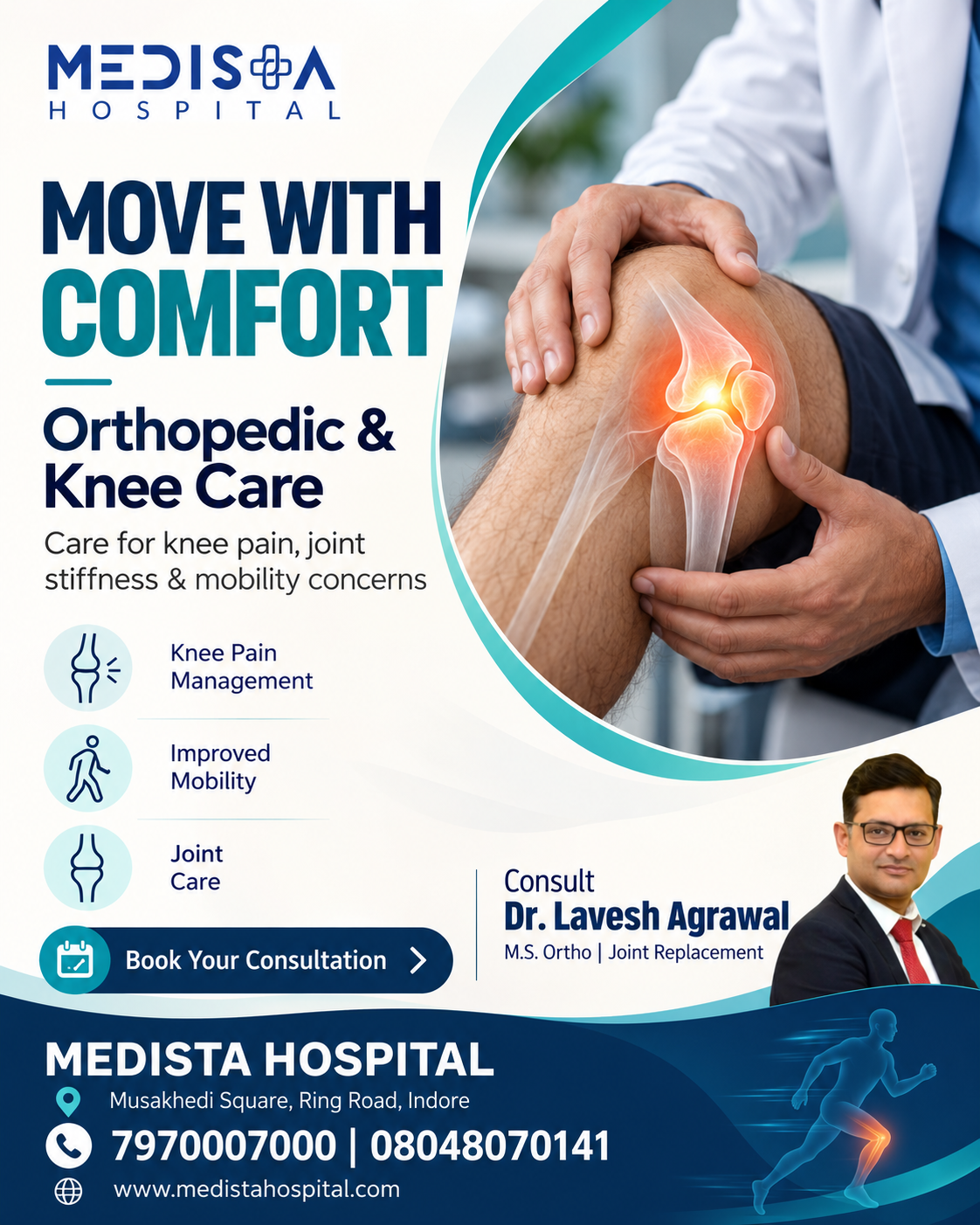
Knee Pain Treatment in Ujjain – Dr. Lavesh Agarwal at Medista Hospital Looking for knee pain treatment in Ujjain? Knee pain can impact daily activities such as walking, climbing stairs, sitting, standing, exercising, and performing daily household chores. Whether the problem develops gradually or begins after an injury, persistent knee pain can restrict mobility and diminish quality of life. Getting a proper medical examination is an important step in understanding the cause and choosing the right treatment plan. If you are seeking knee pain treatment in Ujjain, Dr. Lavesh Agarwal at Medista Hospital is the healthcare contact for patients seeking orthopedic consultations and information about knee-related problems. Patients should confirm their doctor's current consultation arrangements, availability, and treatment options directly with the doctor before visiting Medista Hospital. Knee pain can be caused by a variety of factors, including osteoarthritis, ligament injuries, meniscus tears, tendon problems, inflammation, previous injuries, or other joint problems. Because these conditions can cause similar symptoms, a proper diagnosis is essential before treatment can begin. The appropriate treatment depends on the patient's age, activity level, medical history, symptom severity, physical examination, and diagnostic results. Depending on the underlying condition, care may include activity modifications, physiotherapy, medication prescribed by a qualified doctor, selective injections, or, if necessary, surgical intervention. At Medista Hospital, patients can schedule an orthopedic consultation with Dr. Lavesh Agarwal to evaluate and understand the available options for managing knee pain. The goal of the medical examination is to identify the potential cause of the problem, preserve joint function, and develop a treatment plan that is tailored to the individual patient. Understanding Knee Pain and Its Common Causes The knee is a complex joint that connects the thigh bone, shin bone, and kneecap. Cartilage, ligaments, tendons, muscles, and other structures work together to support movement and stability. Because the knee bears a significant amount of body weight during standing and walking, it can be affected by age-related changes, injuries, repetitive stress, and inflammatory conditions. 1. Knee Osteoarthritis Osteoarthritis is a common cause of knee pain, especially in older people. It involves changes in joint tissue, including gradual deterioration of cartilage and changes in the underlying bone. Common symptoms may include: * Pain when walking or standing for long periods. * Stiffness after rest. * Difficulty climbing stairs. * Reduced knee range of motion. * Swelling or discomfort around the joint. * Difficulty performing daily activities. Treatment depends on the severity of symptoms, functional impairment, test results, and the patient's overall health. Many patients begin with non-surgical treatment, while others may require surgery if pain and discomfort persist despite appropriate treatment. 2. Ligament Injuries The knee contains ligaments that help maintain stability. Injuries can occur during sports, sudden changes in direction, falls, or accidents. Symptoms may include pain, swelling, instability, or difficulty putting weight on the affected leg. The severity of the injury determines whether treatment includes rehabilitation, bracing, activity modification, or surgical evaluation. If the knee feels unstable or frequently becomes loose, it should be evaluated by an orthopedic professional. 3. Meniscus Tears The meniscus is a cartilage structure that helps distribute load within the knee. Tears can occur after a twisting injury or due to age-related changes in the joint. Potential symptoms include pain, swelling, stiffness along the joint line, and difficulty bending or straightening the knee. Treatment varies depending on the tear's location, size, associated injuries, symptoms, and the patient's activity level. Some cases can be managed without surgery, while others may require further specialist evaluation. 4. Tendon-Related Knee Pain Tendons connect muscles to bones and help move the knee. Repetitive loads, certain sports activities, and other factors can irritate or injure tendons. Pain may be felt when running, jumping, squatting, or climbing stairs. Examination helps determine the cause and the appropriate level of activity modification and rehabilitation. 5. Knee Pain with Swelling Some inflammatory or medical conditions can cause pain, swelling, warmth, and stiffness around the knee. In some cases, symptoms can progress rapidly. Warmth and swelling in the knee, along with a fever or general feeling of unwell, warrants immediate medical attention, as some causes require immediate treatment. 6. Previous Injuries and Repetitive Stress Old injuries, repetitive movements, a sudden increase in physical activity, and inadequate recovery can contribute to knee symptoms. A proper evaluation considers the patient's activity patterns, previous injuries, examination findings, and other possible causes rather than assuming that all knee pain is due to aging. Symptoms That May Require a Knee Pain Evaluation Knee pain can manifest differently depending on the underlying condition. A medical evaluation may be appropriate if you experience: * Persistent pain when walking or standing. * Stiffness when staying up or sitting for long periods. * Difficulty bending or straightening the knee. * Swelling around the knee joint. * Pain when climbing or descending stairs. * Decreased ability to walk long distances. * Feeling as if the knee is unstable. * Pain after a fall, twisting injury, or sports activity. * Recurring symptoms that interfere with daily routine. * Decreased mobility despite rest or initial treatment. These symptoms do not establish a diagnosis on their own. The cause should be evaluated by a qualified healthcare professional. If you cannot bear weight after an injury, the knee appears deformed, experience sudden severe swelling, or the knee becomes hot and red with a fever, seek immediate medical attention. Sudden injury accompanied by an inability to straighten the knee or a locked joint also requires prompt evaluation. Knee Pain Treatment in Ujjain - Consult with Dr. Lavesh Agarwal Patients seeking treatment for knee pain in Ujjain may benefit from an orthopedic evaluation to understand the cause of the discomfort and available management options. Dr. Lavesh Agarwal at Medista Hospital can be contacted for an orthopedic consultation, knee pain evaluation, and appropriate treatment options. Specific services, consultation locations, and appointment availability should be confirmed directly with the hospital. When is knee surgery considered? Surgery may be considered when a specific structural problem requires surgery or when symptoms and functional limitations persist despite appropriate non-surgical treatment. The decision depends on the diagnosis, examination findings, imaging where relevant, the patient's overall health, and the expected benefits and risks. Knee Replacement Surgery Knee replacement may be considered for selected patients with advanced knee osteoarthritis or other severe joint damage that causes persistent pain and limits everyday activities. During knee replacement, damaged joint surfaces are replaced with artificial components designed to restore joint function and reduce pain. The exact procedure depends on the affected part of the knee and the patient's clinical condition. Potential benefits may include improved mobility and reduced pain, but results vary. Like any major operation, knee replacement carries risks and requires rehabilitation and follow-up. Partial Knee Replacement In selected patients, the damage may be limited primarily to one part of the knee. Partial knee replacement may be considered when the patient's anatomy, ligament function, disease pattern, and other clinical factors make this procedure appropriate. It is not suitable for everyone suffering from knee pain or arthritis. A detailed orthopedic evaluation is needed to determine whether partial or total knee replacement is an appropriate option. Ligament or Meniscus Surgery Some ligament injuries and meniscus tears may require surgery, especially when there is significant instability, a repairable tear, mechanical symptoms, or other specific clinical signs. Other injuries can often be managed with rehabilitation or non-surgical treatment. The decision should be individualized rather than based solely on the appearance of the injury on imaging. Recovery After Knee Surgery The recovery process depends on the patient's health, the condition of the knee before surgery, and adherence to rehabilitation. The care plan may include wound care, pain management, mobility exercises, physiotherapy, and follow-up appointments. Patients should follow the surgeon's instructions regarding walking assistance, weight-bearing, driving, work, and returning to exercise. No specific recovery time or outcome can be guaranteed for each patient. Frequently Asked Questions (FAQs) 1. Where can I find treatment for knee pain in Ujjain? If you are looking for treatment for knee pain in Ujjain, you can contact Dr. Lavesh Agarwal at Medista Hospital to inquire about an orthopedic consultation and available treatment options. Please confirm the consultation location and appointment availability directly with the hospital. 2. What are the common causes of knee pain? Common causes include osteoarthritis, ligament injuries, meniscus tears, tendon problems, inflammation, previous injuries, and repetitive stress. Clinical assessment is required to determine the cause in an individual patient. 3. When should I consult an orthopedic doctor for knee pain? If pain persists, swelling recurs, movement becomes difficult, walking becomes difficult, or the knee feels unstable, consider an orthopedic consultation. Severe symptoms or serious injuries may require immediate medical attention. 4. Can knee pain be treated without surgery? Yes. Depending on the cause, treatment may include activity modifications, physical therapy, prescription medication, supportive devices, or selective injection treatments. Surgery is considered based on the severity and diagnosis of the problem. 5. Does every patient with knee osteoarthritis need a knee replacement? No. Knee replacement is generally considered for select patients with significant joint damage, persistent symptoms, and functional impairment when appropriate non-surgical treatment has not provided adequate relief. This decision requires an individual assessment of each patient. 6. What is the difference between partial and total knee replacement? Partial knee replacement repairs only the damaged portion of the knee joint in some patients, while total knee replacement replaces the entire knee joint. The appropriateness of this procedure depends on the pattern of damage, ligament function, anatomy, and other clinical factors. 7. Can physiotherapy help with knee pain? Physiotherapy can help improve strength, mobility, balance, and function in many knee conditions. The exercise plan should be based on the diagnosis, symptoms, and the patient's physical ability. 8. What tests may be necessary to diagnose knee pain? Based on the clinical assessment, the doctor may recommend X-rays, MRIs, or specific lab tests. Not every patient needs all of these tests; the investigation should be based on the suspected cause and clinical findings. 9. Can knee pain be caused by aging? Age-related joint changes, including osteoarthritis, can cause knee pain. However, knee pain is not always due to aging, and persistent symptoms should be evaluated to rule out an underlying problem. 10. Is knee pain after an injury serious? Some minor injuries heal with proper care, while others involve ligament, meniscus, bone, or other structural damage. Severe pain, inability to bear weight, deformity, or rapid swelling after an injury require immediate medical attention. Knee Pain Doctor in Ujjain Orthopaedic Doctor for Knee Pain in Ujjain Knee Specialist in Ujjain Knee Joint Pain Treatment in Ujjain Knee Arthritis Treatment in Ujjain Knee Pain Consultation in Ujjain Dr. Lavesh Agrawal Medista Hospital Orthopaedic Consultation in Ujjain Knee Pain Treatment Near Me Best doctor for knee pain treatment in Ujjain Orthopaedic consultation for knee pain in Ujjain Knee pain treatment options for older adults in Ujjain Non-surgical knee pain treatment in Ujjain Knee osteoarthritis treatment consultation in Ujjain Doctor for knee pain while walking in Ujjain Treatment options for knee stiffness and swelling in Ujjain Knee pain specialist consultation at Medista Hospital Dr. Lavesh Agrawal knee pain consultation Knee replacement evaluation for severe knee arthritis Treatment for knee pain after an injury Knee joint evaluation Knee osteoarthritis Ligament injury assessment Meniscus tear evaluation Knee rehabilitation Physiotherapy for knee pain Knee replacement consultation Partial knee replacement evaluation Joint mobility Orthopaedic care Knee swelling assessment Knee stiffness management