Robotic Knee Replacement in Dewas – Advanced Knee Replacement Surgery by Dr. Lavesh Agarwal at Medista Hospital
Are you suffering from chronic knee pain, difficulty walking, stiffness, or limited knee movement? If knee pain is affecting your daily activities and reducing your quality of life, robotic knee replacement in Dewas may be an advanced treatment option worth considering. Robotic-assisted knee replacement is a modern surgical method designed to help surgeons plan and perform knee replacement procedures with greater precision.
An experienced orthopedic surgeon at Medista Hospital, Dr. Lavesh Agarwal provides orthopedic consultation and knee replacement treatment to patients with serious knee joint problems. Patients in Dewas and surrounding areas can consult with him to understand whether robotic-assisted knee replacement is right for their condition.
At Medista Hospital, we focus on accurate diagnosis, personalized treatment planning, advanced surgical techniques, and post-operative rehabilitation to help patients regain mobility and improve their quality of life.
What is Robotic Knee Replacement Surgery?
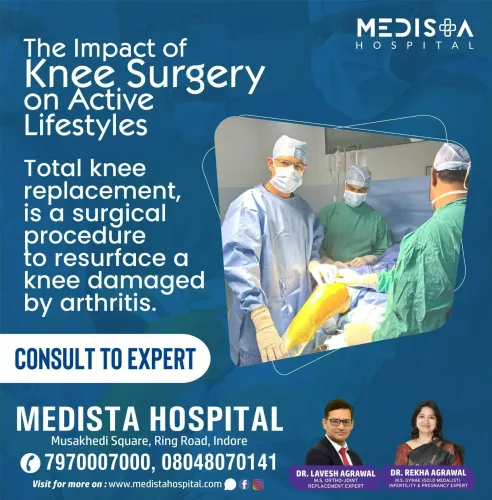
Robotic knee replacement is an advanced method of knee replacement surgery in which the surgeon uses robotic-assisted technology to plan and guide specific steps of the procedure. This helps create a personalized surgical plan based on the patient's knee anatomy.
During the procedure, the surgeon uses robotic assistance to assist in proper bone preparation and implant positioning. However, the surgeon maintains complete control throughout the operation.
The primary purpose of robotic-assisted knee replacement is to improve surgical planning, facilitate proper placement of the implant, and restore proper knee alignment.
Who Needs Robotic Knee Replacement Surgery?
Robotic-assisted knee replacement may be recommended for patients with advanced knee joint damage that doesn't respond to non-surgical treatment.
You may need an orthopedic evaluation if you experience:
* Persistent knee pain when walking or standing.
* Severe knee stiffness, especially in the morning.
* Difficulty climbing stairs or getting up from a chair.
* Swelling and irritation around the knee joint.
* A crooked leg or visible deformity in the knee.
* Reduced knee movement and flexibility.
* Knee pain that interferes with sleep or daily activities.
* Poor relief from medications, physiotherapy, or injections.
An orthopedic specialist will evaluate your symptoms, medical history, X-rays, and overall health before recommending surgery.
Benefits of Robotic-Assisted Knee Replacement
Robotic-assisted knee replacement offers several potential benefits depending on the patient's condition, surgical technique, and the technology used.
1. Personalized Surgical Planning Robotic technology can help tailor a surgical plan based on the patient's knee anatomy.
2. Improved Surgical Accuracy Robotic assistance allows the surgeon to follow the planned bone cuts and implant positioning with greater control.
3. Improved Implant Alignment Correct implant positioning and knee alignment are crucial factors in the success of knee replacement surgery.
4. Customized Surgical Approach
The procedure can be planned according to the patient's individual joint anatomy and needs.
5. Improved Knee Function
The primary goal is to reduce pain, restore joint function, and help patients return to their daily activities.
6. Rehabilitation Support
After surgery, a structured physiotherapy and rehabilitation program helps patients gradually improve knee strength, flexibility, and mobility.
Common Conditions Recovering from Knee Replacement Surgery
Dr. Lavesh Agarwal treats patients with a variety of knee joint conditions, including:
* Osteoarthritis: A degenerative disease that causes cartilage damage, joint pain, and stiffness.
* Rheumatoid arthritis: An autoimmune disease that can cause inflammation and damage to the knee joints.
* Post-traumatic arthritis: Joint damage that occurs after a previous knee injury or fracture.
* Chronic knee degeneration: Diseases that affect the normal alignment and movement of the knee.
• Advanced cartilage damage: Severe cartilage deterioration that causes persistent pain and difficulty walking.
Why choose Dr. Lavesh Agarwal for robotic knee replacement in Dewas?
Choosing the right orthopedic surgeon is an important step when considering knee replacement surgery.
Dr. Lavesh Agarwal provides orthopedic consultation and treatment to patients suffering from complex knee problems and joint disorders at Medista Hospital, Indore.
Here are the reasons to consult Dr. Lavesh Agarwal:
* Orthopedic examination and personalized treatment planning.
* Assessment of advanced knee arthritis and joint damage.
* Guidance on robotic-assisted knee replacement.
* Assessment of conventional and advanced knee replacement options.
* Surgical care tailored to each patient's needs.
* Post-operative recovery and rehabilitation guidance.
Patients in Dewas looking for an experienced knee replacement surgeon can consult with Dr. Lavesh Agarwal at Medista Hospital to understand their treatment options.
Robotic Knee Replacement Procedure: Step-by-Step
Understanding the surgical process can help patients feel more confident about their treatment journey.
Step 1: Initial Orthopedic Consultation
The surgeon assesses knee pain, medical history, mobility, and previous treatments.
Step 2: Diagnostic Testing
X-rays and other necessary tests help determine the extent of joint damage.
Step 3: Personalized Surgical Planning
Robotic-assisted technology can be used to create a surgical plan tailored to the patient's knee anatomy.
Step 4: Surgical Procedure
The surgeon performs the knee replacement using robotic assistance for certain steps, including bone preparation and implant positioning.
Step 5: Post-Surgery Monitoring
The medical team monitors the patient for pain management, wound care, and early recovery.
Step 6: Physiotherapy and Rehabilitation
A structured rehabilitation program helps restore knee movement, improve muscle strength, and gradually return to daily activities.
Recovery After Robotic Knee Replacement Surgery
Recovery after knee replacement surgery varies from person to person. Factors such as age, overall health, muscle strength, severity of arthritis, and participation in rehabilitation can affect recovery.
Generally, recovery includes:
* Early assisted movement as advised by the surgeon.
* Regular physiotherapy sessions.
* Gradual improvement in walking ability.
* Exercises to strengthen surrounding muscles.
* Proper wound care and follow-up appointments.
* Gradually returning to daily activities as advised by your doctor.
Following your surgeon's instructions and attending regular physiotherapy sessions are essential for a good recovery.
Robotic Knee Replacement at Medista Hospital in Dewas
If you are looking for a robotic knee replacement in Dewas, an expert orthopedic consultation can help you make the right decision about your knee health.
At Medista Hospital, Dr. Lavesh Agarwal provides consultations to patients suffering from severe knee pain, arthritis, joint stiffness, and mobility issues.
Medista Hospital is a 100-bed multispecialty hospital offering a wide range of medical and surgical services. Patients from Dewas, Indore, and surrounding areas can undergo orthopedic evaluations and discuss the right knee replacement options.
Don't let persistent knee pain hinder your daily activities. Consult an orthopedic specialist to understand if robotic-assisted knee replacement is right for you. Book your orthopedic consultation today!
Frequently Asked Questions (FAQs)
Q1. What is robotic knee replacement surgery?
Robotic knee replacement is an advanced surgical procedure that uses robotic-assisted technology to allow surgeons to plan and perform specific steps of knee replacement surgery with greater precision.
Q2. Is robotic knee replacement better than traditional knee replacement?
Robotic-assisted surgery offers advantages in surgical planning and accuracy. However, the best approach depends on the patient's knee condition, anatomy, the surgeon's expertise, and individual needs.
Q3. Who is a good candidate for robotic knee replacement?
Patients with advanced knee osteoarthritis, severe cartilage damage, persistent knee pain, and mobility limitations may be candidates. An orthopedic surgeon should evaluate these conditions before recommending surgery.
Q4. Is robotic knee replacement surgery safe?
Like any major surgery, robotic-assisted knee replacement carries potential risks, such as infection, blood clots, stiffness, and implant-related problems. Choosing the right patient and surgical care helps manage these risks.
Q5. How long does it take to recover from robotic knee replacement?
Recovery varies from patient to patient. Many patients begin walking with assistance immediately after surgery, while improvements in strength, flexibility, and daily activities continue over the following weeks and months.
Q6. Does robotic knee replacement reduce post-surgery pain?
Robotic assistance improves surgical planning and precision. Post-surgery pain varies from person to person, and proper pain management and rehabilitation are essential.
Q7. Can both knees be replaced using robotic-assisted technology?
Yes, some patients can have both knees replaced. This decision depends on overall health, medical fitness, and the surgeon's assessment.
Q8. Where can I consult for robotic knee replacement near Dewas?
Patients in Dewas can consult Dr. Lavesh Agarwal at Medista Hospital, Indore, for orthopedic evaluation and guidance regarding robotic-assisted knee replacement.
Q9. There is no age limit for robotic knee replacement surgery. The decision depends on the extent of joint damage, severity of pain, overall health, activity level, and medical fitness, rather than age alone.
Q10. Does robotic knee replacement guarantee a permanent solution?
No surgery can guarantee permanent results. Modern knee implants are designed for long-term use, but the duration of the implant depends on several factors, including activity, body weight, type of implant, and the individual's health.
Keywords