Joint Replacement Surgery in Ujjain – Dr. Lavesh Agrawal at Medista Hospital
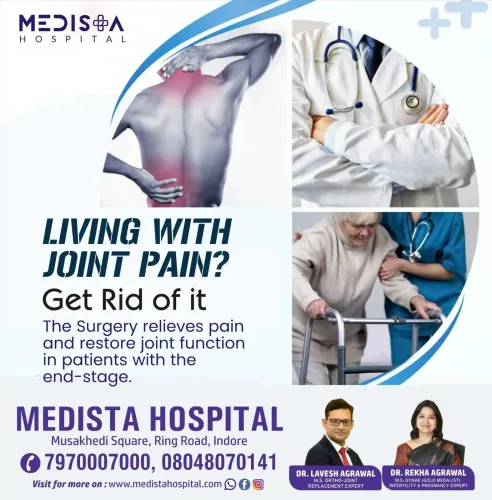
Do you experience persistent knee pain, hip pain, difficulty walking, or stiffness that's affecting your daily activities? If joint problems are making it difficult to climb stairs, stand for long periods, or perform daily tasks, consulting with an orthopedic specialist can help you understand available treatment options.
Dr. Lavesh Agarwal at Medista Hospital provides orthopedic consultations to patients seeking information about joint replacement surgery and advanced joint care.
Joint replacement surgery is a procedure in which damaged joint surfaces are replaced with artificial parts called implants or prostheses. It's typically recommended for patients with severe joint damage, especially when pain and mobility problems persist despite appropriate non-surgical treatment.
Patients seeking joint replacement surgery in Ujjain can consult with an orthopedic specialist to understand whether knee replacement, hip replacement, or another treatment is right for their condition.
The goal of joint replacement treatment is to reduce pain, improve joint function, and help patients gain more independence in daily activities.
What Is Joint Replacement Surgery?
Joint replacement surgery, also known as arthroplasty, is an orthopaedic procedure performed to replace damaged portions of a joint with artificial components.
Joint damage may occur due to osteoarthritis, rheumatoid arthritis, previous injuries, fractures, or other conditions affecting the joint.
During surgery, the damaged cartilage and affected bone surfaces are removed or prepared, and suitable artificial components are placed to restore joint function.
The most commonly performed joint replacement procedures include:
• Total Knee Replacement (TKR)
• Partial Knee Replacement
• Total Hip Replacement (THR)
• Revision Joint Replacement
The choice of surgery depends on the patient's age, joint condition, medical history, activity level, and diagnostic findings.
Common Types of Joint Replacement Surgery
1. Knee Replacement Surgery
Knee replacement surgery is performed when the knee joint becomes severely damaged and painful.
Osteoarthritis is one of the common reasons patients may require knee replacement. It causes gradual wear of the protective cartilage, leading to pain, stiffness, swelling, and reduced mobility.
Common symptoms that may require orthopaedic evaluation include:
• Persistent knee pain while walking.
• Difficulty climbing or descending stairs.
• Knee stiffness after sitting or resting.
• Swelling around the knee joint.
• Difficulty standing for extended periods.
• Reduced ability to bend or straighten the knee.
• Pain that interferes with sleep or everyday activities.
A knee replacement may be considered when other appropriate treatments do not provide sufficient relief.
2. Hip Replacement Surgery
Hip replacement surgery is performed to replace damaged parts of the hip joint with artificial components.
The procedure may be recommended for patients experiencing severe hip pain and restricted movement due to arthritis, certain fractures, or other joint conditions.
Common symptoms of hip joint problems include:
• Pain in the groin or hip region.
• Difficulty walking or standing.
• Pain while getting up from a chair.
• Reduced hip movement.
• Difficulty putting on footwear.
• Stiffness after periods of inactivity.
• Pain that affects sleep and daily activities.
An orthopaedic evaluation helps determine whether hip replacement or another treatment option is appropriate.
3. Partial Knee Replacement
Partial knee replacement may be considered when arthritis or joint damage is limited to one compartment of the knee.
Unlike total knee replacement, this procedure replaces only the affected portion of the knee joint.
Whether a patient is suitable for partial knee replacement depends on the condition of the remaining cartilage, ligaments, bone, and overall joint alignment.
4. Revision Joint Replacement
Revision joint replacement is a procedure performed to replace or correct an existing joint implant.
It may be required in situations involving implant loosening, wear, infection, instability, or other complications.
A detailed clinical assessment and imaging evaluation are necessary before deciding on revision surgery.
When is joint replacement surgery needed?
Joint replacement is typically considered when joint damage becomes so severe that it significantly impacts a person's quality of life.
An orthopedic specialist may evaluate patients with:
1. Severe or persistent joint pain.
2. Advanced osteoarthritis.
3. Severe joint stiffness.
4. Difficulty walking or performing daily activities.
5. Reduced joint mobility.
6. Joint deformity or alignment problems.
7. Little improvement with medication, physiotherapy, or other appropriate treatment.
Not every patient with knee or hip pain needs surgery. Treatment decisions should be based on symptoms, physical examination, imaging results, and the patient's overall health.
Causes of Joint Damage
Many medical conditions can affect joint health and ultimately lead to the need for joint replacement.
Osteoarthritis
Osteoarthritis is a degenerative joint condition in which protective cartilage gradually wears away. It commonly affects the knees and hips and can cause pain, stiffness, and limited range of motion.
Rheumatoid Arthritis
Rheumatoid arthritis is an autoimmune inflammatory condition that can damage joint tissue over time. In severe cases, joint damage can be severe.
Previous Joint Injuries
Fractures, ligament injuries, and other serious joint injuries can cause long-term joint problems.
Avascular Necrosis
Avascular necrosis occurs when the blood supply to bone tissue is reduced, leading to bone loss. This can affect the hip joint and cause severe pain and loss of function.
Age-Related Joint Changes
Aging can cause changes in cartilage, bone, and joint function. However, age alone does not determine whether someone needs joint replacement surgery.
Joint Replacement Surgery by Dr. Lavesh Agarwal at Medista Hospital
Patients considering joint replacement surgery in Ujjain can seek orthopedic advice from Dr. Lavesh Agarwal at Medista Hospital. It is important to seek proper advice to determine the cause of joint pain and understand available treatment options.
This examination may include:
* Discussion of symptoms and medical history.
* Physical examination of the affected joint.
* Assessment of joint movement and stability.
* X-rays or other imaging, if medically indicated.
* Review of previous treatments and medications.
* Assessment of general health and surgical fitness.
Based on the results, the doctor may discuss whether conservative treatment, further testing, or joint replacement surgery is appropriate.
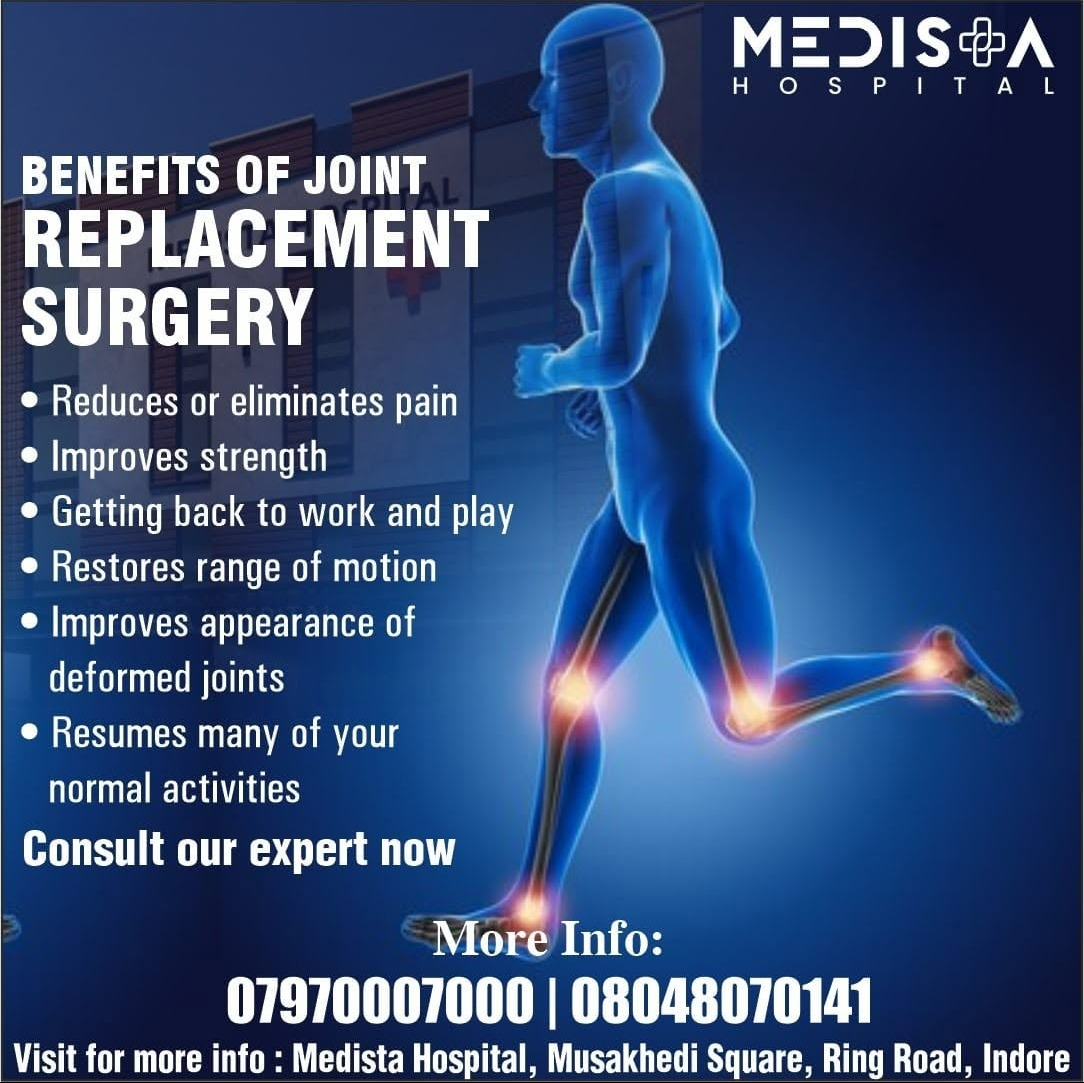
Benefits of Joint Replacement Surgery
Joint replacement surgery can offer several benefits for patients with extensive joint damage.
1. Relief from severe joint pain
Replacing damaged joint surfaces can significantly reduce the pain caused by severe joint disease.
2. Improved mobility
After proper rehabilitation, many patients experience improved movement and walking ability.
3. Improved daily activities
Improved joint function can make activities like standing, walking, and climbing stairs easier.
4. Improved quality of life
Reduced pain and improved mobility can help patients participate in daily activities more comfortably.
5. Improved Joint Alignment
In some patients, surgery can help correct joint deformities and improve alignment.
Important: Results vary from patient to patient. Joint replacement surgery carries potential risks, including infection, blood clots, implant loosening, stiffness, and persistent pain. A specialist should explain the benefits and risks before surgery.
What is the recovery process after joint replacement surgery?
Recovery after joint replacement surgery takes time and depends on the procedure, general health, and rehabilitation progress.
Stage 1: Hospital Recovery
Following surgery, the medical team monitors the patient's pain, wound condition, mobility, and overall recovery.
Stage 2: Initial Movement
When medically appropriate, patients can begin assisted movement and walking with support under the guidance of the healthcare team.
Stage 3: Physiotherapy
Physiotherapy plays an important role in improving strength, flexibility, balance, and joint movement.
Stage 4: Gradual Return to Activities
Patients gradually resume routine activities based on their recovery and the instructions of the treating surgeon.
Stage 5: Follow-up Consultation
Regular follow-up appointments help monitor healing, joint function, and implant performance.
Following rehabilitation instructions and attending scheduled reviews are essential parts of recovery.
Why choose Dr. Lavesh Agarwal at Medista Hospital?
Choosing the right orthopedic specialist and hospital is an important decision when considering joint replacement surgery.
Patients in Ujjain can consult with Dr. Lavesh Agarwal at Medista Hospital to discuss their knee, hip, and other joint problems.
Key points to discuss during the consultation include:
* Diagnosis and severity of joint damage.
* Whether surgery is necessary.
* Available surgical methods.
* Implant options and their appropriateness.
* Expected recovery and rehabilitation.
* Potential surgical risks and complications.
* Follow-up care and long-term joint management.
Medista Hospital has previously been described as a multispecialty hospital, with orthopedic care among its services. Patients should confirm specialist availability, surgical facilities, and admission arrangements directly with the hospital.
Joint Replacement Surgery for Patients from Ujjain
Patients from Ujjain experiencing chronic knee pain, hip pain, or advanced arthritis may consider an orthopaedic consultation to understand their treatment options.
An early assessment can help identify the underlying cause of joint pain and determine whether non-surgical management or joint replacement evaluation is appropriate.
Patients travelling from Ujjain to Medista Hospital should confirm the consultation schedule, hospital location, appointment availability, and relevant medical records required before travelling.
If you are experiencing persistent joint pain or difficulty walking, consult an orthopaedic specialist rather than delaying evaluation.
Frequently Asked Questions (FAQs)
1. Who is the right doctor for joint replacement surgery in Ujjain?
Patients seeking a joint replacement consultation can consult an orthopedic specialist. Dr. Lavesh Agarwal of Medista Hospital can be contacted to inquire about consultation availability and treatment options.
2. What is joint replacement surgery?
Joint replacement surgery is an operation in which damaged joint surfaces are replaced with artificial parts to help reduce pain and improve joint function.
3. When should I consider knee replacement surgery?
Knee replacement may be considered when severe joint damage causes persistent pain, stiffness, and mobility problems that do not respond to appropriate non-surgical treatment.
4. What are the common signs that I may need hip replacement surgery?
Persistent hip or back pain, difficulty walking, reduced hip movement, stiffness, and difficulty performing daily activities may indicate the need for an orthopedic evaluation. These symptoms do not necessarily mean surgery is necessary.
5. What is the difference between a total and partial knee replacement? A total knee replacement involves replacing the entire damaged joint surface of the knee, while a partial knee replacement repairs only the affected area in eligible patients.
6. Is joint replacement surgery safe?
Joint replacement is a well-known orthopedic procedure, but like any major surgery, it carries risks. These include infection, blood clots, complications related to the implant, stiffness, and anesthesia. Each individual's risk depends on the patient's health and medical conditions.
7. How long does recovery take after knee replacement surgery?
Recovery varies from person to person. Many patients recover gradually over several weeks and months, with physiotherapy and follow-up care playing a key role.
8. Is physiotherapy necessary after joint replacement surgery?
Yes. Physiotherapy is usually an essential part of rehabilitation. It helps improve joint movement, muscle strength, balance, and walking ability.
9. Can both knees be replaced?
In some patients, both knees may be replaced during the same operation or through separate procedures. This decision depends on the patient's health, the condition of the joints, and the risk assessment of the surgery.
10. Can younger patients undergo joint replacement surgery?
Yes, younger patients may be considered for joint replacement if medically indicated. However, age, activity needs, the duration of the implant, and other treatments must be carefully considered.
Keywords